Flip open any major newspaper and you'll find "global warming" in one headline and "climate change" in the next. Same story, different label. Most readers assume the two terms are perfect synonyms, and honestly, for a long time I did too. Then I started writing about climate policy for a living and kept getting corrected by climate scientists on my word choices, in email threads and on video calls where someone would gently point out that I'd used the wrong term in a paragraph about rainfall patterns.
The difference matters more than most people realize. Global warming describes the rise in Earth's average surface temperature. Climate change describes the much wider set of shifts that result from that warming: altered rainfall, stronger storms, shifting seasons, rising seas, melting ice. One is a thermometer reading. The other is the whole cascade it sets off.
Key Takeaways
- Global warming = rising average surface temperature. Climate change = everything that happens as a result.
- Global warming is a subset of climate change, not a synonym for it.
- Scientists prefer "climate change" because it captures more than temperature.
- Both terms describe the same underlying process, driven overwhelmingly by greenhouse gas emissions from burning fossil fuels.
- Weather is short-term; climate is the long-term average. Don't confuse either with the weather outside today.
Global warming vs. climate change: what's the real difference?
Picture a pot of water on a stove. Turn up the heat, and the temperature climbs — that's global warming. But the boiling water also changes pressure, creates currents, spatters steam. That wider mess is climate change. The heat is the trigger; everything else is the response.
The scientific distinction is precise. Global warming refers specifically to the increase in Earth's average surface temperature, measured across land and ocean over decades. Climate change is the umbrella term for the broader shift in long-term weather patterns: not just hotter days, but wetter winters in some regions, drier summers in others, more intense hurricanes, and rising sea levels as glaciers retreat.
Why the two terms get mixed up
They're not wrong when used loosely. Global warming does cause climate change, so the two walk hand in hand in casual conversation. But precision matters once you're reading policy, science reporting, or a corporate sustainability report. Someone writing "global warming" when they mean "climate change" is describing a symptom rather than the full illness.
My own rule of thumb after years of writing about this: if a sentence is only about temperature, say global warming. If it's about rainfall, storms, ecosystems, agriculture, or migration, say climate change.
Is it better to say climate change or global warming?
For most contexts, climate change is the better choice — and there's a reason scientists and major institutions trended toward it decades ago. It's more accurate, more comprehensive, and less likely to be misread on a cold winter day.
The famous Frank Luntz memo from 2003, which advised US political figures to say "climate change" instead of "global warming" because the latter sounded scarier, did real damage to how the term gets perceived. That memo was about framing, not science. But the scientific case for "climate change" existed well before it. The term captures phenomena that have nothing to do with rising temperature alone: ocean acidification, shifting growing seasons, changes in snowfall.
When "global warming" is the right term
Don't abandon it entirely. If you're talking about the direct physical measurement — the roughly 1.1 to 1.3 degrees Celsius of average surface warming since the late 1800s — global warming is exactly the right phrase. It's the accurate label for the thermometer, not the whole system.
I'll admit a personal bias here: I find "climate change" clearer in almost every article I write, but I always keep "global warming" available for the narrow case of temperature itself. Both belong in your vocabulary. Just know when to reach for each one.
Can you explain global warming in a simple way?
Yes, and you don't need a physics degree. Certain gases in the atmosphere — carbon dioxide, methane, water vapor — trap heat from the sun the way a blanket traps body heat. That's the greenhouse effect, and a little of it is essential. Without it, Earth would be a frozen rock.
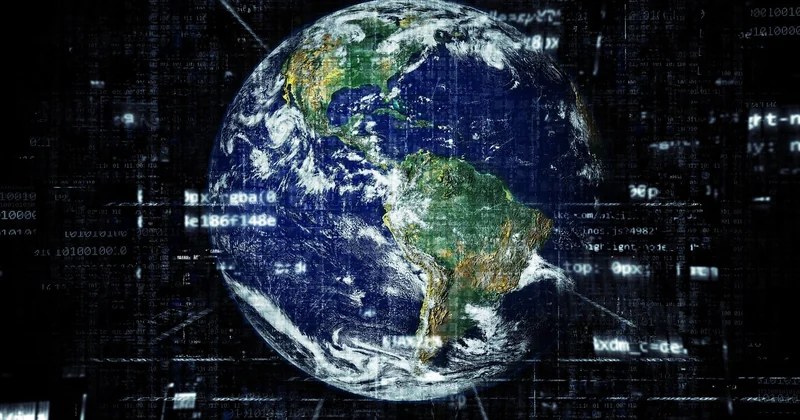
The problem is that human activity has thickened the blanket. Burning coal, oil, and natural gas releases carbon dioxide that had been locked underground for millions of years. More CO₂ in the atmosphere means more heat trapped, and the planet's average temperature creeps upward. That's global warming, in one paragraph.
The numbers that matter
Before the industrial revolution, atmospheric CO₂ sat around 280 parts per million. Today it's well past 420. That's roughly a 50% increase, and it happened in about as much time as separates you from your great-grandparents. The mechanism is simple; the consequences are not.
Rising heat melts ice, warms oceans, and shifts rainfall patterns. All of that is the climate change layer on top of the warming layer.
What comes first, global warming or climate change?
Global warming comes first — logically and literally. The added heat from greenhouse gases triggers the chain reaction that we call climate change. No warming, no cascade.
That said, the two aren't cleanly sequential in the real world. Warming starts the process, and then climate change feeds back into more warming: melting Arctic ice reduces the reflective white surface, so more sunlight gets absorbed, which warms the ocean further. It's a loop, not a straight line. That's why scientists talk about "feedback" so much — a term I once brushed past for years before really understanding its importance.
The warmest years on record
Recent years have clustered among the hottest ever measured. The last decade or so has consistently been hotter than the previous one, and the trend isn't breaking. If you ever wanted proof that global warming is real, the year-over-year temperature record is the strongest evidence available — no single data point proves anything, but the direction is unmistakable.
What do 97% of scientists believe is causing climate change?
The figure refers to the near-total scientific consensus that human activity — primarily greenhouse gas emissions from fossil fuels — is the dominant cause of modern climate change. Multiple peer-reviewed analyses of published climate research have found that the overwhelming majority of actively publishing climate scientists endorse this position, with the 97% figure coming from large surveys of research papers and scientists in the field.

If you want to understand why the number is so high, consider the physics. The greenhouse effect is well-documented and has been understood since the 1800s. The isotopes in atmospheric CO₂ point to fossil fuel origins — they carry a chemical signature a volcano or a forest fire wouldn't produce. The heat is going where the physics says it should go, in the quantities the physics predicts. Alternative explanations (solar cycles, volcanic activity) fall short by orders of magnitude.
What the figure does not mean
It doesn't mean every single scientist agrees on every detail. The 97% refers to the cause of modern warming, not the precise size of future impacts or the right policy response. Those are separate debates, and sane people can disagree on them. But the core question — is the warming human-caused? — is about as settled as science gets.
Comparison at a glance
| Aspect | Global warming | Climate change |
|---|---|---|
| What it measures | Rise in average surface temperature | Full set of shifts in weather, oceans, ice, and seasons |
| Scope | Narrow — the thermometer | Broad — the whole system |
| Preferred by | Scientists discussing temperature specifically | Institutions, policy, and general communication |
| Relationship | The trigger | The larger consequence |
Climate change vs. weather: another tangles worth untangling
Since we're cleaning up terminology, let's address the confusion that trips up more readers than any other: weather versus climate. Weather is what you get outside today — a rainy Tuesday, a warm weekend. Climate is the long-term average of that weather over decades.
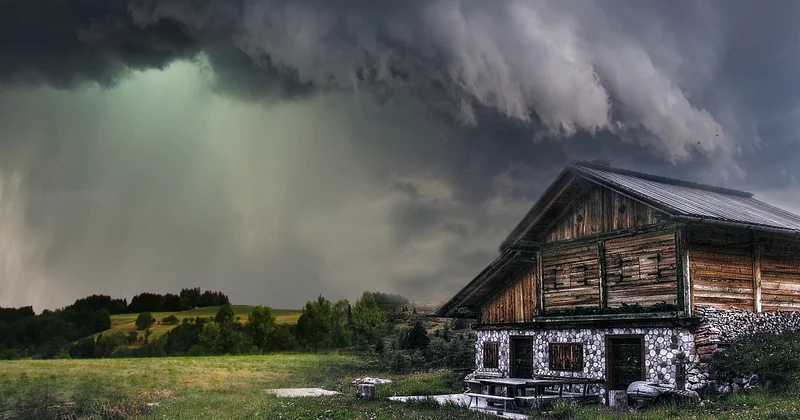
A single cold snap doesn't disprove climate change any more than one hot day proves it. The signal lives in the trend, not the snapshot. I've seen people point to a snowy week in February as evidence that global warming is a hoax, and it's a category error every time: they're measuring a single data point against a decades-long average.
Why cutting the right term actually matters
Language shapes how we think about problems, and this distinction has real-world consequences. When politicians say "global warming" while talking about floods, droughts, and crop failures, they're narrowing a sprawling crisis into a single metric — and that makes it easier to dismiss. "It's cold this week, so much for global warming" is a sentence that only works because someone used the wrong term.
Say "climate change" and the conversation opens up to everything it should include: heat, but also water, food, migration, infrastructure. Say "global warming" and you've accidentally handed skeptics a single number to argue against. Terminology is a form of clarity. And clarity, when the stakes are this high, is worth defending.
The two terms will keep appearing side by side, and that's fine. Just remember which one is the symptom and which one is the whole body. If you keep that straight, you'll read climate coverage more accurately than most people ever do.