Ask a room full of energy engineers what they think of green hydrogen and you'll get two answers in the same breath. One says it's the only way to decarbonise steel, shipping and fertiliser. The other says it's a rounding error dressed up as a revolution. Both are right, and that's what makes this fuel so hard to write about honestly.
I've been following the electrolyser market since the days when a 10 MW project made the trade press. Back then, buying green hydrogen meant calling three suppliers and getting quoted something close to €7 per kilogram. Today you can find contracts at a fraction of that in the sunniest parts of the world. So the potential is real. The question is whether the demand is.
Key takeaways
- Green hydrogen is made by splitting water with renewable electricity — no CO₂ at the production stage
- It is genuinely the cheapest route to decarbonising steel, ammonia and long-haul shipping
- Roughly 40% of the energy is lost before the hydrogen is even stored
- Around 90% of global hydrogen production today is still grey, made from fossil gas
- Buyers are scarce because green hydrogen still costs more than the fossil alternative in most markets
- The technology works. The business case is what's fragile
Green hydrogen potential as a clean fuel: what it can and cannot do
Strip away the press releases and the picture is fairly simple. An electrolyser runs an electric current through water. The oxygen goes one way, the hydrogen the other. If the electricity comes from wind or solar, the whole process is close to carbon-free at the point of production.
The appeal is that hydrogen burns cleanly and, unlike batteries, it stores energy for months rather than hours. A tank of hydrogen doesn't self-discharge, doesn't degrade in the cold, and can be moved by pipeline or ship. For a steel plant that needs to run 24/7 or a container vessel crossing the Pacific, that combination is hard to beat.
How does green hydrogen work, exactly?
Three steps, and each one has a cost attached:
- Electrolysis — renewable electricity splits water into hydrogen and oxygen. Efficiency is around 60-70% on a good day.
- Compression or liquefaction — hydrogen is extremely light, so you compress it to 350-700 bar or cool it to −253°C. This step alone can eat 10-30% of the energy content.
- Use — whether you burn it in a turbine, run it through a fuel cell, or combine it with nitrogen to make ammonia, another chunk of energy disappears.
Stack those losses and you're looking at a round-trip efficiency somewhere near 35-40% when electricity goes in and useful work comes out. Compare that with a lithium battery at 85-90% and you understand why hydrogen is not the answer for passenger cars.
Green hydrogen vs blue hydrogen: is the colour label marketing?
This is where a lot of people get lost, so let's be blunt. The colour tells you how the hydrogen was made, not how clean it is in practice.
| Type | Made from | CO₂ at production | Typical cost per kg |
|---|---|---|---|
| Grey | Fossil gas, steam reforming | High — around 9-10 kg CO₂ per kg of H₂ | €1.5 – €3 |
| Blue | Fossil gas + carbon capture | Lower, but capture rates vary | €2 – €4 |
| Green | Water + renewable electricity | Near zero | €4 – €8 in most markets |
Notice the gap in that last column. That's the entire problem in one line. Blue hydrogen is often sold as a bridge technology, and I think that framing is mostly honest — but the capture rate matters enormously. If a plant captures 60% of its CO₂ and calls itself clean, you should be skeptical.
Can green hydrogen be used as a fuel?
Yes, it can. And it already is, in a handful of places. Hydrogen has powered buses in several European cities for years, runs through fuel cells in forklifts inside warehouses, and burns in industrial furnaces where electrification simply isn't an option. The engineering is not speculative. It works.

The catch is that "can be used" and "should be used" are different questions. Every time you convert electricity into hydrogen and back, you lose more than half of it. So the sensible rule is: use hydrogen where nothing else fits.
- Steel and cement — high-temperature heat that electricity struggles to provide
- Ammonia and fertiliser — hydrogen is already the feedstock; swapping grey for green is a direct substitution
- Long-haul shipping and aviation — where battery weight makes electrification impossible
- Seasonal storage — banking summer solar for January
- Passenger cars, home heating, short-haul deliveries — poor fits, and the market has largely figured that out
What did Elon Musk say about hydrogen?
He called fuel cells "fool cells" and described hydrogen as an energy storage method that is "extremely inefficient." He's made the point repeatedly, most memorably when he said hydrogen is "the most dumb thing" for energy storage.

Here's the thing: on the specific question of cars, he was right. Storing electricity as hydrogen, compressing it, trucking it to a station, then converting it back through a fuel cell wastes so much energy that a battery wins every time. I've run those numbers myself and the gap is embarrassing.
But Musk's argument gets overextended. He was talking about passenger vehicles, and the criticism lands there. Applied to steelmaking or ocean freight, the same logic breaks down, because there is no battery alternative to compare against. The efficiency critique is serious — it just isn't universal.
Why is almost nobody buying green hydrogen?
This is the question I find most interesting, because the answer isn't technical. It's financial and structural.
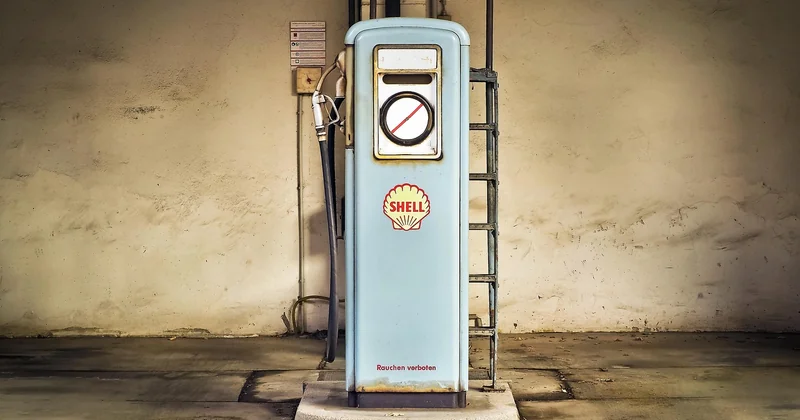
A procurement manager at a chemical plant has one mandate: keep costs down and keep the plant running. Green hydrogen costs more than grey in most markets, requires new supply contracts, and carries the risk that the supplier doesn't deliver. Switching means sticking your neck out. Very few people get promoted for paying 40% more for the same molecule.
Then there's the chicken-and-egg problem. Producers won't build a 500 MW plant without a buyer signed for fifteen years. Buyers won't sign for fifteen years without a price they can budget. And the banks won't finance either side without the other. I've watched projects stall for two years on exactly this loop.
The demand side is thinner than the headlines suggest
Most of the large green hydrogen projects announced in the last few years are not really selling hydrogen at all. They're selling ammonia to fertiliser makers, or they exist because a government subsidy made them pencil out. Genuine voluntary demand — a company buying green hydrogen because it wants to, not because it must — is still rare.
That's the honest picture. The pipeline of announced capacity is enormous. The volume actually under signed offtake contracts is a small slice of it.
What are the downsides of green hydrogen?
Plenty. Any article that lists only the upside is selling you something.
You lose a lot of energy at every step
Round-trip efficiency of 35-40% means you need roughly two and a half units of renewable electricity for every unit of useful work. When wind and solar are cheap and abundant, that's acceptable. When they're not, it's a genuine argument against the whole chain.
Storage and transport remain painful
Hydrogen is the lightest element, which makes it a nightmare to contain. It leaks through the smallest gaps, embrittles steel pipes over time, and liquefying it costs a fortune in energy. Retrofitting a natural gas network to carry pure hydrogen isn't a swap — it's a rebuild.
Water use and infrastructure
Electrolysis needs clean water. In the arid regions with the best solar resources, that's not a trivial requirement. Add desalination and you've added cost and complexity to a project that was already marginal.
Safety perception
Hydrogen burns with an almost invisible flame and ignites across a wide range of concentrations. Engineers handle this fine — the gas industry has done it for a century. The public, however, remembers airships. That perception gap slows permitting more than any technical issue.
None of these are dealbreakers. All of them are costs that somebody has to pay, and right now that somebody is usually a taxpayer.
Where this leaves us
The potential of green hydrogen isn't in question. The electrolysers work, the industrial demand is real, and the cost curve has come down faster than most analysts expected a decade ago. What remains unsettled is who pays the premium while the market scales, and how long that subsidy period lasts.
My own view: the winners will be projects built next to the customer, powered by dedicated renewables, selling into a use case with no alternative. Everything else — the shipping-to-Europe, the blending-into-the-gas-grid experiments, the hydrogen-powered commuter car — will quietly disappear. Not because the physics failed, but because the arithmetic never worked.
The part I keep coming back to is this. We spent a century building an energy system around a fuel we could dig up. Green hydrogen asks us to build one around a fuel we have to manufacture, store, and lose a third of along the way. That's a harder engineering problem than the hype suggests — and a more interesting one too.