Drive through rural Denmark or west Texas and you'll see them before you understand them: rows of white towers turning so slowly they look almost idle. A single modern turbine can power thousands of homes, and yet the same machine has a habit of splitting a village down the middle. Both things are true. That contradiction is exactly why the wind energy advantages and challenges deserve a serious look, rather than the usual cheerleading or the usual dismissal.
I'll give you my stance up front: onshore wind is one of the cheapest and cleanest sources of power available to us, and most of the objections you hear are either solvable engineering problems or social problems dressed up as technical ones. But there are real challenges, and pretending otherwise does the industry no favours.
Key Takeaways
- Wind is one of the cheapest sources of new electricity, but only in places with a decent wind resource.
- The biggest operational headache is intermittency, and the fix is storage, grid interconnections and a diversified mix — not a bigger turbine.
- Social acceptance is where projects live or die, far more often than people realise.
- Wildlife impact is real and measurable, but site-specific and mitigation is achievable.
- Political opposition can now rival technical problems in some markets.
Wind energy advantages and challenges at a glance
Here's the honest picture: wind power has already earned its place on the grid. It isn't a pilot project any more. Roughly a third of global electricity now comes from renewables, and wind is one of the largest contributors to that figure, alongside hydro and solar.
The core advantages, briefly
The advantages people list are genuinely true, even if they've become a bit of a cliché:
- No fuel, no combustion. Once a turbine is standing, the wind is free forever. No fuel price volatility, no extraction, no supply chain for what makes it spin.
- Very low lifecycle carbon. A modern turbine pays back the energy used to build it within a matter of months to a couple of years, then runs for two decades or more.
- Domestic and abundant. No country imports wind. That matters more than it sounds in a world of energy price shocks.
- Fast to deploy compared with the alternatives. A wind farm can go from planning to power in less time than almost any nuclear project.
- And it creates skilled local jobs: technicians, planners, maintenance crews.
The core challenges, equally briefly
The other side of the ledger is where most articles get lazy. Let me be specific.
- Intermittency. You get what the weather gives you, not what demand asks for.
- Capacity factor reality. Onshore turbines produce at full power only a fraction of the time; the average is somewhere in the 30–45% range, offshore higher.
- Grid strain. Concentrating output in windy areas means you need transmission lines to carry it.
- Land and spacing. Turbines need clear space around them, which changes the footprint.
What are five advantages and disadvantages of wind energy?
This is the question I get asked most, so let me answer it neatly. Five of each, and I'll keep them honest rather than marketing-friendly.

Five genuine advantages
Renewable and inexhaustible: no matter how much wind you use, there's more tomorrow.
Zero operational emissions: electricity from a turning turbine doesn't produce CO₂ at the point of generation.
Low and stable cost: the headline figure here is that onshore wind is now among the cheapest sources of new electricity generation in many markets — its cost has fallen dramatically over the past decade, driven by bigger blades and taller towers.
Land used twice: wind farms coexist with farming and grazing. Most of the land between towers stays productive.
Energy security. No imports, no geopolitical exposure, no fuel cartel.
Five real disadvantages
Variability: output rises and falls with the wind. This is the big one, and it shapes everything else — storage, grid design, market rules.
Visual and noise concerns: turbines are large, mechanical, and make a low-frequency sound. Some people find them beautiful; some find them intrusive. Both reactions are real.
Wildlife impact: birds and, more significantly, bats can be killed by turbine blades. Site selection and smart curtailment reduce this a lot, but it cannot be waved away.
Upfront capital cost: you pay for a turbine once, at the start. That makes financing and political risk more consequential than they are for a gas plant.
Public opposition. In many places, this has become the single biggest obstacle — bigger than any engineering problem.
What are the challenges with wind energy?
The challenges are where the interesting engineering happens, so it's worth going deeper than the headline list.
Intermittency and the storage question
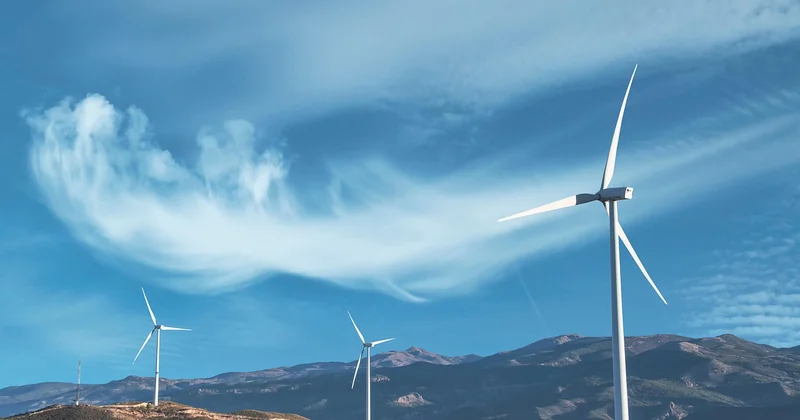
Wind output doesn't follow demand. On a windy night, you might generate more electricity than the grid can use, while on a still, cold afternoon you generate very little. The fixes are well understood: batteries, pumped hydro, interconnection to neighbouring regions, and — most importantly — a diversified mix of sources.
I've watched this play out at the grid level. When a region's wind share climbs above a certain point, the value of each additional megawatt starts to fall unless you also invest in the flexibility to absorb it. That's a systems problem, not a turbine problem.
Grid and transmission
Windy places are often far from where people live. That means long transmission lines, which are slow to permit and expensive to build. This is unglamorous, but it's where most of the real work sits.
Wildlife and environmental trade-offs
Here's a figure I find useful for perspective: cats, buildings and vehicles kill vastly more birds than wind turbines do. That doesn't excuse bad siting, but it reframes the priority. Modern approaches — siting away from migration corridors, slowing blade speed during peak bat activity — cut the impact substantially with only a small energy penalty.
Social acceptance
Most people say they support wind energy. Most people also don't want a 150-metre tower a kilometre from their kitchen window. That gap between abstract support and local objection is the industry's hardest puzzle, and it's usually solved by giving communities a genuine stake — local ownership, community funds, meaningful consultation — rather than by a leaflet campaign.
What are ten advantages of wind energy?
Strip away the repetition and the ten most defensible benefits look like this:
- Renewable and effectively inexhaustible.
- No CO₂ at the point of generation.
- Zero fuel costs once built.
- Among the lowest-cost sources of new electricity.
- Compatible with agriculture on the same land.
- Creates long-term technical jobs.
- Reduces reliance on imported fuel.
- Fast to deploy relative to large baseload plants.
- Very low lifecycle carbon emissions.
- Modular: a wind farm can be built in phases, scaling with demand.
Why does Trump dislike wind turbines?
This question deserves a straight answer, because it has visibly shaped energy policy debate in the United States.
Trump's objections have been remarkably consistent over the years, and they fall into a few categories. He has repeatedly criticised turbines on visual grounds, saying they spoil landscapes and views from his golf courses in Scotland. He has claimed they are noisy. He has argued that the manufacturing and disposal of blades creates environmental problems. And he has linked wind farms to harm to birds and, more colourfully, to whales. On the economic level, he has framed wind as expensive and unreliable, and has argued it displaces more dependable generation.
Some of those concerns have a kernel of truth worth taking seriously: blade disposal is a genuine waste-stream issue that the industry is only now addressing at scale, and intermittency is real. Others are scientifically shaky — the whale claim in particular has no credible support. But the political effect is undeniable. In my view, the most accurate reading is that opposition to wind in that camp is primarily aesthetic and political, with technical arguments used as reinforcement rather than as the root cause.
Whatever you think of the man, the lesson for anyone working in this sector is uncomfortable: a technology can be cheap, clean and technically sound, and still lose politically.
How wind compares with solar and nuclear
Wind doesn't exist in isolation. Here's how the three main low-carbon options stack up on the dimensions that actually matter to a planner.
| Dimension | Wind (onshore) | Solar PV | Nuclear |
|---|---|---|---|
| Capacity factor | ~30–45% | ~15–25% | ~85–90% |
| Fuel cost | None | None | Significant |
| Land use | High spacing, low ground coverage | High ground coverage | Low |
| Dispatchable on demand | No | No | Yes |
| Typical build time | Short | Short | Very long |
| Public opposition intensity | Moderate to high (local) | Low to moderate | High |
The takeaway from that table isn't that one wins. It's that they solve different problems. Wind and solar are cheap but variable; nuclear is expensive and slow but firm. A serious grid uses all three where it can.
What this means for you
If you're a homeowner considering a small turbine, my honest advice is to check your average wind speed before anything else — most residential sites simply don't have enough. If you're a business looking at a power purchase agreement, wind is often the cheapest route to a credible green claim, provided you're honest about the intermittency. And if you're a policymaker reading this, the message is that the hard part isn't the turbine. It's the grid and the neighbours.
The turbine that turns slowly on a ridge is doing something remarkable and something awkward at the same time. It's converting free, clean, domestic energy into electricity — and quietly asking a community to accept a change to its skyline. Most of the debate you hear about wind energy is really a debate about that second thing, dressed up as a conversation about the first. Which is why, twenty years from now, the turbines will probably still be turning, and the arguments will probably still be going.